
The Hate runs deep for NCAA ‘Free Agency’.

Transfer Portal
The Transfer Portal. The mere mention of the NCAA’s free agency vehicle stirs up venom. Traditionalist and status quo coaches and administrators begin to steam when even thinking about the newfound freedom and power now in the hands of players. Players no longer have to tolerate program misrepresentation, verbal/physical abuse, or program over-recruitment. If recruited with all the flowery phrases, gilded imagry, and rose-colored constructs in reference to State University Z…and the reality is 180 degrees different, they now have the option to abandon ship. Welcome to the New World.
Power and Control. University administrations and their coaching lackeys have held all the reins of power and control for over a century in collegiate sports. Players who bought into the recruiting hype, often found the local reality was far from the gilded images put forth during their courtship. Many found that their status was that of servitude/near slavery without recourse. They had no power to change any aspect of their employment, save quitting and leaving. If one requested to transfer from State U, they needed permission from the administration and the Head Coach. If denied, they stayed and suffered the consequences or the quit the program.
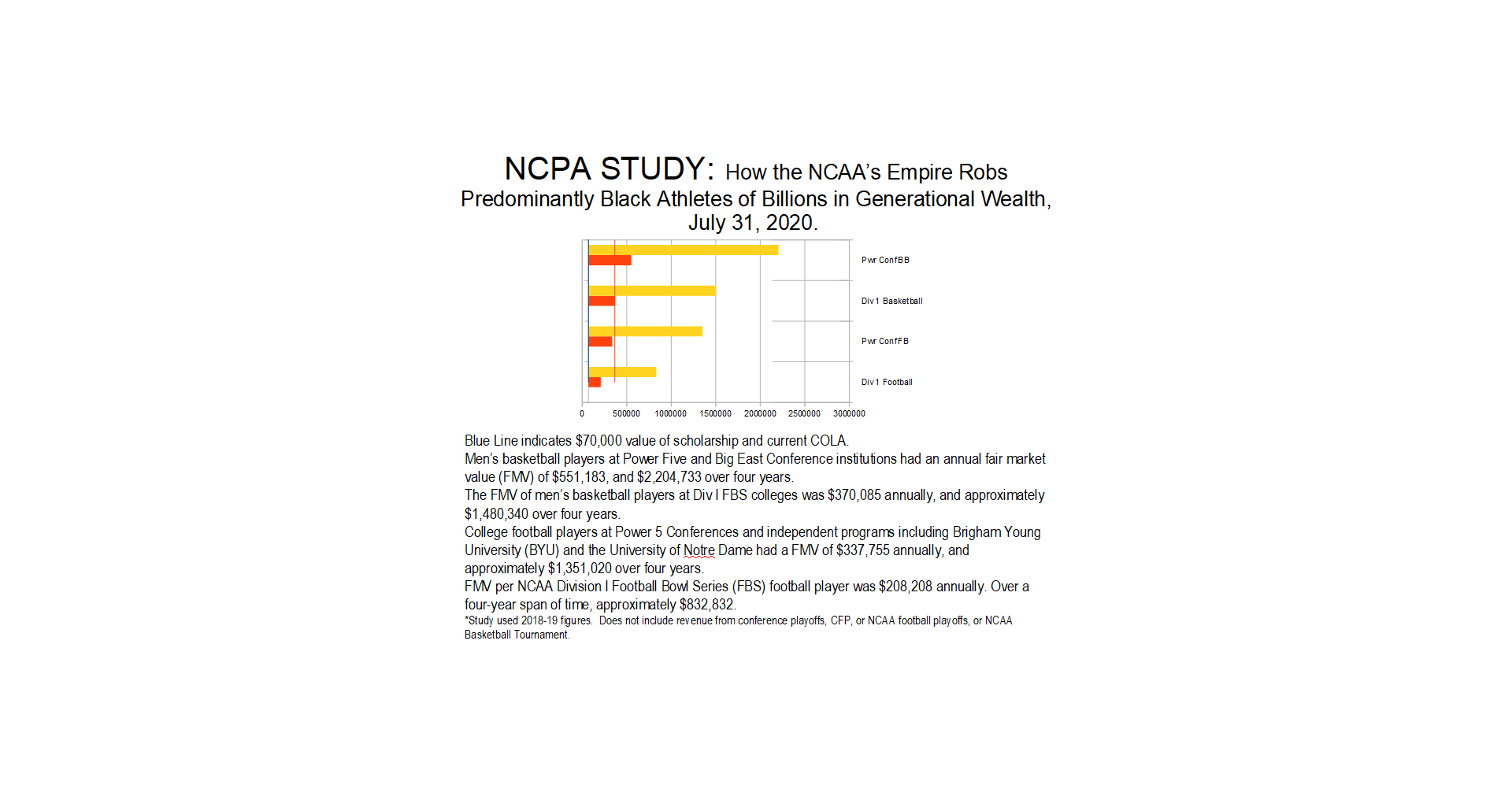
It should be stated for clarity, that according to the National Collegiate Players Association study of July 2020, that Division 1 football and basketball players had a Fair Market Value of between $208K – $551K per year, dependent upon their level.
HTTPS://WWW.NCPANOW.ORG/NEWS/RELEASES-ADVISORIES/STUDY-HOW-THE-NCAAS-EMPIRE-ROBS-PREDOMINANTLY-BLACK-ATHLETES-OF-GENERATIONAL-WEALTH Ramogi Huma NCPA EXECUTIVE DIRECTOR & DR. ELLEN STAUROWSKY, PROFESSOR AT DREXEL UNIVERSITY , JULY 31, 2020.
Therefore, it is not surprising that university administrations and coaches were not inclined to approve players transferring, unless in exceptional circumstances: Poor health or death in the family, coaching changes at the university, or some major extenuating cause. If players leave, potential dollars are also walking out the door with them. It’s best to keep that avenue as restrictive as possible.
The NCAA’s “one-time transfer rule” took effect on April 28, 2021. Then on July 1, 2021, the NCAA made it possible for athletes to profit off their name, image and likeness. Now, just like coaches, players can easily change schools and, perhaps, make a little money too.
https://www.bestcolleges.com/news/2021/12/22/ncaa-transfer-portal-nil-college-football-playoff/ Dean Golembeski article
Therein lies the rub. Not just a loss of control of the player base, but upheaval within the program structure. Players now can easily leave/transfer if they were mislead/lied to about the reality of State U. If the recruiting hype doesn’t match the reality of high-4 star/5 star players riding pine-the Wiggins’, Zions, & Bates’ of college sports, now can opt out of the program. Tyrant coaches and callous administrations cannot stop players from leaving the plantation(s). Now coaches have no option, other than recruiting the Transfer Portal, as well as the HS/AAU circuits. This upheaval in the status quo has cut into program continuity, coaching downtimes, golf outings, and off-season vacations. Now they have to earn those 7-8 figure salaries.
The major cry is that of ‘tampering’ with players, by competitor schools. It’s easy to spout, but more difficult to prove. Furthermore, the charge of tampering also seems meant to cover a wide range of tyrannical coaching behaviors by complainants. Whenever there is a stampede of players vacating a school with stabile staffing, the first thing that comes to mind-other than a coaching regime change-is abusive behavior on the part of that staff. Why would a steady stream of players leave a happy, productive, and nourishing program? Mass exoduses of non-graduate players from a university imply programmatic problems, problems previously swept under numerous rugs.

It’s not all good. 1800 or so basketball players / 3000+ football players entered the NCAA’s 2022 Transfer Portal. Some players graduate, go pro, or move on with life. Some leave early for potential professional play. Many enter the portal looking for new opportunities. Many don’t find those opportunities and this move becomes the end of the line for their collegiate careers. You roll the dice and you take your chances.
Today, players not receiving the ‘pie-in-the-sky’ recruiting promises, those being abused, and those looking for a better deal, now have options. It’s a new day, a new deal, and one that was long overdue for players. Proceed with caution.








 Bluenotes