
Senators aim to end 81 years of NCAA Oppression with Athlete’s Bill of Rights.
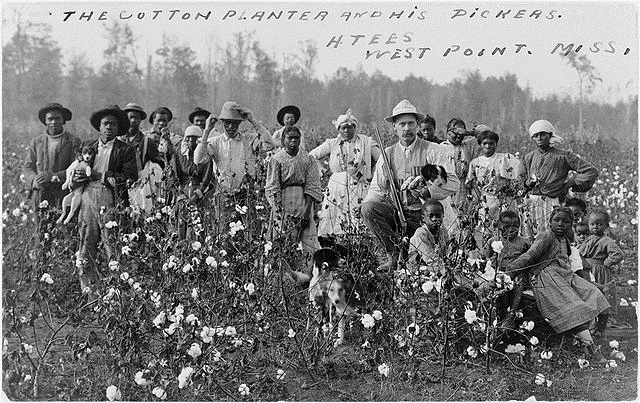
The NCAA annually trots out its’ antiquated notion of Amateurism to justify the enslavement of college football and basketball players. Siting that amateurism is a direct descendant of the Greek games of antiquity. Also insinuating that college athletes play for the love of the game, not money. Funny thing though, the Greeks have no word for “amateur/amateurism”. The closest word they have is “idiot”.
In his book entitled A Visitor’s Guide to the Ancient Olympics, Faulkner (2012) wrote that
“There is not – and never has been – anything ‘amateur’ about Greek sport. The Greeks do not even have a word for this. The closest they get is idiotes, a word used to describe a private person who lacks professional expertise; by extension, it then comes to mean someone who is unskilled, ignorant, and commonplace.”
The NCAA and colleges themselves negated the notion of amateurism further when they switched from 4-year “scholarships” to 1 year, renewable, work contracts back in 1973. This move was designed to facilitate the dumping of problematic, uncooperative players (Tobys) more efficiently and to assist new coaching regimes with program changes. In doing so, the curtain of amateurism in college football/basketball was pulled aside and an athlete’s status was permanently exposed as a worker rather than a student-athlete as previously claimed by the NCAA and universities. Member schools have repeatedly voted down a return to 4-year scholarships citing recruiting disparities versus the large, wealthy major universities, and a fear of long-term commitments in a changing competitive environment. Universities have also continually shot down player-centric NIL changes going as far back as 2011.
Several proposed changes over the years have called for paying players stipends, NIL rights, and outright wages. Recent state-level NIL Bills have been passed and are due to go into effect over the next several months and years. The NCAA has tried to circumvent these initiatives by going to Congress, asking for overrides, and NCAA control of these changes. Thus far Congress has said no to the NCAA’s requests. In fact, it seems that NIL legislation is only a good first step toward equity for college athletes.
The inequities go further still. The recent study commissioned by the National Collegiate Players Association, How the NCAA’s Empire Robs Predominantly Black Athletes of Billions in Generational Wealth, July 31, 2020. This study shows the gross profiting of the universities, their staff, coaches, as well as the NCAA, from the labors of their athletes in the revenue-producing sports.
“To provide a sense of the magnitude of the economic injustice that college players in the revenue-producing sports of football and men’s basketball have experienced over the years, we have previously conducted studies estimating the fair market value of players based on what they would receive if the industry was governed by revenue-sharing agreements of 47% and 50% respectively (Huma & Staurowsky, 2011; 2013)4.
Using updated revenue data reported in compliance with the Equity in Athletics Disclosure Act (EADA) for the academic year 2018-2019, the average fair market value per NCAA Division I Football Bowl Series (FBS) football player was $208,208. Over a four-year span of time, the average fair market value of an FBS football player would equal approximately $832,832. College football players at Power 5 Conferences (Atlantic Coast Conference (ACC), Big Ten, Big 12, PAC-12, Southeastern Conference (SEC)) and independent programs including Brigham Young University (BYU) and the University of Notre Dame had a fair market value of $337,755, and approximately $1,351,020 over four years.
4 The 47% and 50% revenue sharing estimates are based on the revenue sharing percentages in the fair market collective bargaining agreements (CBAs) in the NFL and NBA
The fair market value of men’s basketball players at FBS colleges was $370,085, and approximately $1,480,340 over four years. Men’s basketball players at Power Five and Big East Conference institutions had a fair market value of $551,183, and $2,204,733 over four years.”
The above figures do not include additional fair market value income from football bowl games or football playoffs, nor do they include basketball player income from NCAA Tournaments.
The aforementioned Blumenthal-Booker bill, labeled the “College Athletes Bill of Rights”, proposes to change not only the current landscape but the historic environment of collegiate sports. It would provide a systematic revisión, adaptation, and a new modus operandi to the current U.S. collegiate sports panoply of exploitation by universities and their NCAA.
“AUGUST 13, 2020 WASHINGTON, D.C. –
U.S. Senator Cory Booker (D-NJ), along with Senators Richard Blumenthal (D-CT), Chris Murphy (D-CT), Kirsten Gillibrand (D-NY), Ron Wyden (D-OR), Mazie Hirono (D-HI), Kamala Harris (D-CA), Bernie Sanders (I-VT), Chris Van Hollen (D-MD), and Brian Schatz (D-HI), today announced the framework for a new college athletes bill of rights that will advance justice and opportunity for college athletes.
The proposal will guarantee fair and equitable compensation, enforceable health and safety standards, and improved educational opportunities for all college athletes. College sports have the unique ability to transcend partisan divisions and cultural differences to unite millions of Americans as fans. Yet, college sports have also come to reflect many of the inequalities that permeate everyday life in America—where systems fail to protect those under the charge of others, where hard-working Americans are blocked from sharing in the profits they help create, and where systemic and structural racism disadvantage and exploit people of color.
Booker said, “As a former college athlete, this issue is personal to me. The NCAA has failed generations of young men and women even when it comes to their most basic responsibility—keeping the athletes under their charge healthy and safe. The time has come for change. We have an opportunity to do now what should have been done decades ago—to step in and provide true justice and opportunity for college athletes across the country. Our college athletes bill of rights establishes a new framework for fairness, equity, and safety in college athletics, and holds colleges accountable to these standards.”
Blumenthal said, “The present state of college athletics is undeniably exploitive. The literal blood, sweat, and tears of student-athletes fuels a $14 billion industry, but until very recently, those students received little in return and were vulnerable to being tossed aside. Reforming this system is about basic justice: racial justice, economic justice, and health care justice,” Blumenthal said. “Our framework is centered around the principle of empowering athletes. We want to give college athletes the tools they need to protect their economic rights, pursue their education, prioritize their health and safety, and most critically, hold their schools and organizations like the NCAA accountable.”
These eleven Senators have hit the nail on the head. It is imperative in today’s society that they stand up for the historically abused, disadvantaged, and powerless student-athlete. Everybody associated with college sports makes money, except the players. Should their “College Athletes Bill of Rights” be passed into law, it will usher in a belated but welcome sea change in collegiate athletics. This bill will abolish slavery in the college sports landscape. Players will have finally become partners in the collegiate sports industry. It will be a day that was long overdue.
Passage of the bill would also lessen, if not put an end to, the ongoing collegiate climate of university cheating, the illicit payment of players/families by boosters and shoe companies, and the “do whatever it takes to win” mentality that permeates today’s sports. In my opinión, the NCAA and member universities would rather the current legacy remain intact. The greed and rampant spending by universities has become addictive. They have no issue with the current climate of cheating and improprieties, as long as their money pipeline is not interrupted.
Money talks. If you have doubts, merely look at the extremes most schools and the NCAA are willing to endure, in order to play this 2020/21 season. Should the national legislators decide to defeat this bill, it will be tacit approval for the universities and their NCAA to continue unabated with the ongoing legacy of US collegiate sports slavery and cheating.
James Harvey


 Bluenotes