State of College Hoops…from the Wild West to business as usual.


Well. It’s been five years now that we’ve benefitted from the Name-Inage-Likeness (NIL) Era. Five years of confusion, fluctuation, growing pains, and new wrinkles. Add in the also new collegiate profit-sharing rules, and the landscape of collegiate athletics has had a watershed change. Or has it? The more things change – the more they remain the same.
There was thought and sentiment that the introduction of legal payment to players would, to some degree, level the playing field. That non-bluebloods would reap an infusion of previously unreachable talent(s) and that parity would reign. Hah! However, we have seen a wider sowing of player talents evolve, but not as a direct result of the NIL legislations, but primarily due to the abrupt intrusion & rapid expansion of the Transfer Portal.
What has transpired to date:
- Whether you are pro/con…Players are now getting paid in college athletics, They are benefitting from NIL deals and collegiate level profit sharing. The old booster combines, now NIL combines, pay players legally rather than under-the-table. They (players) are now employees,
- Congress finally has tentatively passed a player protection bill. That bill unwisely grants legal powers back to the NCAA, which will become a thorn in Congress’ side in due time.
- The players are now more akin to pro ‘free agents’ and via their family, agent/agency, shoe circuit coaches, etc., are finally receiving their due compensation for their work.
- The rich continue to stockpile players. Leveraging both historic and recent success rates, tapping both large booster bases and deep pocket fat-cat donors alike, and milking their longstanding pipelines from both the HS and the ‘shoe circuit’ ranks.
- The lesser tiers of schools also benefit, as team player caps exclude hoards of talent from becoming labor pools of the rich. NIL collectives at these schools, combined with profit sharing has deepened the pockets of the lesser tiered. It is not uncommon now for a Gonzaga, Alabama, Creighton, Illinois, USC, or even a Howard or BYU to snag a high-level talent these days. Opportunity for players pay & play abound! Another unexpected consequence.
- The Major factor in this era has become the Transfer Portal. Players as free agents can now come and go, pretty much at will. There is always a port for uber-talented players…and generally speaking, for high level role players as well. If the top 2 tiers are full, there is some tier 3 or below school with a stash – to capture a ‘big fish’ player on-the-move. The average number of moves appears to be 3 transfers/player.. And therein lies the problem.
- There is little to no program cohesion in this climate. There is no loyalty, only the revolving door. The turnover of players is high and annual. Coaches stretching every rule to the limits. Looking at you, LSU’s Will Wade. Hah!
- Overpaid coaches (see Dusty May) lament they no longer have ‘down time’ for golfing, tennis, a ‘vacation’, etc. This…as he bolts from UMich to the pro game! The cycle is recruiting, summer camp, fall practices, the season, and back to recruiting. Ohhh, poor rich guy. Coaches joyfully riding the pay escalator and deriding the very environment which generously benefits them. Now they must ‘earn’ the big bucks.
Pay-for-play is legal now. The ‘haves’ still have. The rich continue to be rich, to prosper, and to gain the lions’ share of recruits/players-with varying degrees of success. The system now freely allows the money to flow and players were quick to capitalize. Tiers 2 & 3 also profit, as their coffers run deep. Everyone is getting paid. Happy now? See College tiers rankings link from 2023 NYT/Athletic article below.
Congressional help is not yet final. The Protect College Sports Act of 2026 “ Open to protect athletes, preserve true competition in college sports and maximize collegiate athletic opportunities while bringing desperately-needed stability to the college sports system”. This version is not nearly as good, nor as comprehensive as some of the previous offerings (Booker bill, others – which never got acted on). It’s main feature is the restoration of relevant powers to the NCAA. See link below.
Scholarship caps have set player limits on schools, which in itself, allows a trickle-down avenue for talent to land at lower-tiered schools. The Alabamas, Floridas, Arizonas, St Johns’, USCs, and the like – many of which have very deep pockets – get their fair share of talent. Thanks to the current ‘free agent’ attitudes and open floorplan environment, players are just as likely to opt for a Tier 3-5 school given the ready availability of funding/pay.
The unexpected key factor entering into this era is/was the Transfer Portal. Opening the gate to free agency was a wildcard, and deemed a good thing. The unintended consequence was that free agency would develop into an annual flood. The portal has offered new and greater ‘opportunities’ for players. Some view it as akin to the annual ‘coaching caroussel’ of firings & hirings at the coaching levels, and subsequent migration of players following said coach. What has unexpectedly evolved, is the annual spring flood of players opting to transfer (1K to 2K – basketball, generally). This annual migration has upset the stability cart that was once the bedrock of collegiate programs.
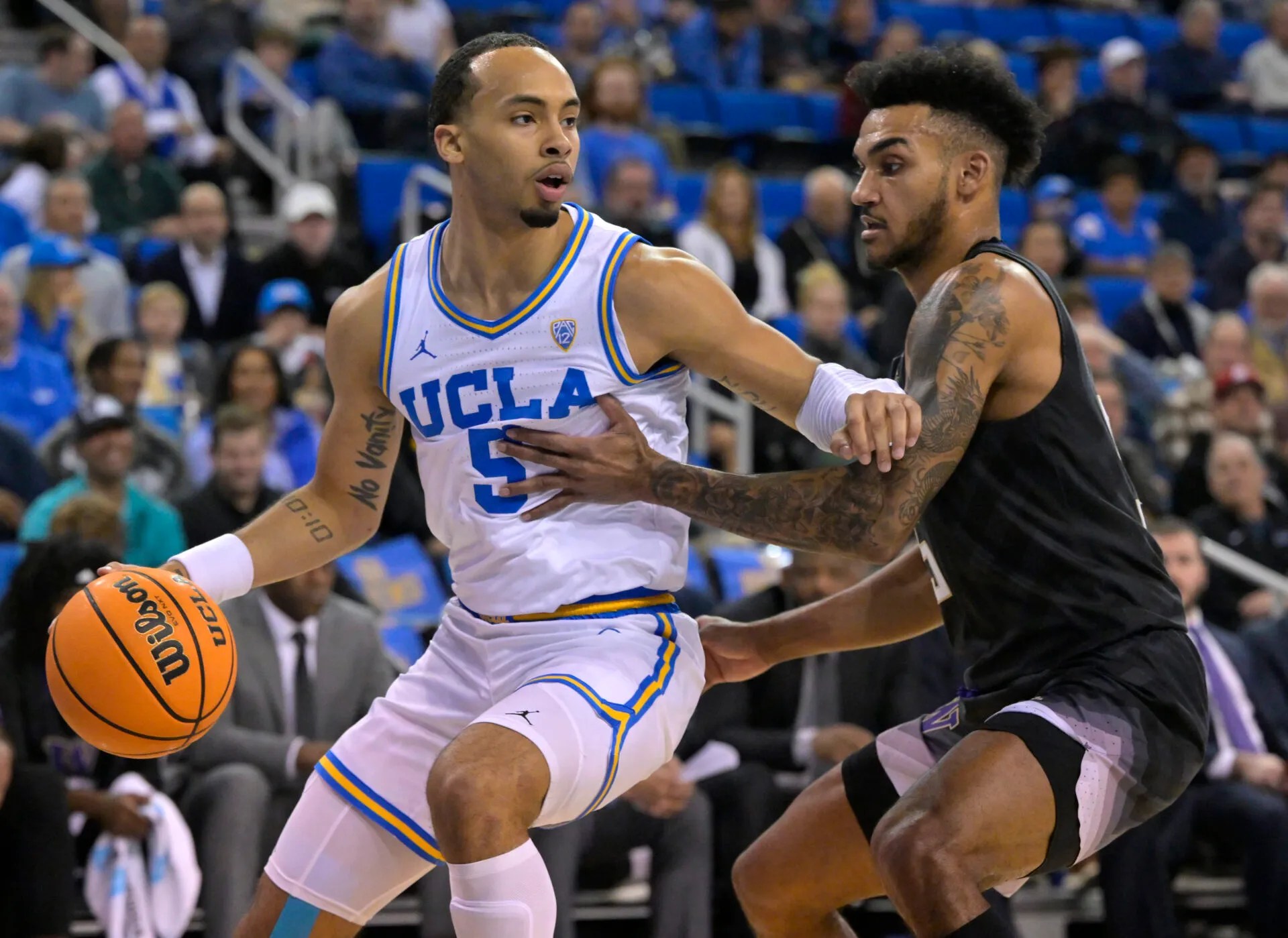
Players see and opt to follow the dinars…taking them to new programs – often on an annual basis. Players are staying in college: They make good money and most have no legit prospect of going professional – whether in the NBA or overseas. They smartly ‘milk’ the current system for all it’s worth (Antwann Jones-6 schools, Kadary Richmond /Aaron Bradshaw/many others-4 schools). A relative handful of early departure (to the pros) players have tried to return to the college game (Amari Bailey, Charles Bediako, James Nnaji, Euro pros). New LSU Coach Will Wade is buying mid-20’s ‘old men’ Euro pros by the bushel basket. There is little to no ‘loyalty’ to a particular or specific school – in most cases. It is common to see players now with 2-4 schools on their playing resumes. In extreme cases 5-7 schools on an individual resume.. The new 5 for 5 rules will reel in/eliminate the vast majority of outlier players and stabilize/streamline the transfer process.
Many coaches – both the longstanding ‘old school’ guys and the youngbloods, are now lamenting a lack of ‘downtime’. Complaining that coaching staffs must now annually re-recruit existing players, as well as continuing to reach out to frosh recruits, and also entertaining collegiate transfers. The workload has increased and the work is never done these days. Hey bubba…that’s life in the big city/life in the fast lane. They are finally having to ‘earn’ their money. Oh well…They didn’t complain while riding the salary escalator all these years! That’s why they get paid the “big bucks”. As a middle-class working guy who slaved as a ‘military working dog’ for over twenty years, then another 15 as a military contract employee-they get no sympathy here. They can golf upon retirement, lol!
The state of college hoops. It appears to be sorting and settling itself out over time, after a high activity – high uncertainty stretch. We shall see.
Jim Harvey a.k.a. @gtmoblue

Links:
The state of the state of college hoops


